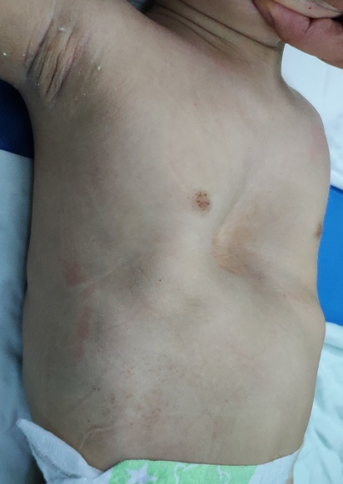
Physicians generally classify pectus excavatum as a congenital chest wall deformity. This condition is characterized by an inward depression of the sternum and its connecting ribs, forming a funnel shape. While this typical “caved-in” appearance is usually visible in infancy, sometimes the symptoms may not be noticeable for many years, becoming very prominent only during the rapid bone growth phase of early adolescence.
Understanding the Progression
Although pectus excavatum is a congenital condition, the severity of the sternal depression can change over time. In many patients, as the chest wall develops, the inward depression of the sternum deepens, potentially leading to compression of vital organs in the chest cavity. This structural change can result in decreased lung capacity and impaired cardiac function. Because this deformity originates from the skeletal structure, it does not resolve on its own and usually requires medical evaluation to monitor its impact on overall health.
Modern Surgical Interventions
When the depression becomes symptomatic or severe, various pectus excavatum treatments are available to restore the chest’s natural contour. Advances in modern medicine have provided safer options for patients across a wider age range. The Wang procedure offered by ICWS is a minimally invasive surgical technique that uses steel wires to lift the sunken bony structure and secure it to a bar, ultimately achieving effective correction. This method does not require entering the chest cavity; instead, the bar is placed on the surface of the depressed bony structure, avoiding the risk of heart damage and making it particularly suitable for young children. Adult patients, on the other hand, can opt for the Wung procedure, which is better suited for them.
Surgical Excellence at ICWS
Correcting a congenital deformity requires highly specialized care and precise execution. The Institute of Chest Wall Surgery (ICWS) provides these advanced surgical solutions, focusing on minimally invasive techniques that minimize trauma and accelerate recovery. By employing proprietary methods such as the Wang procedure, the surgical team can ensure long-term stability of the reshaped chest wall. For patients seeking a complete solution to this problem, ICWS provides the necessary clinical expertise to improve both physiological function and cosmetic outcomes.
