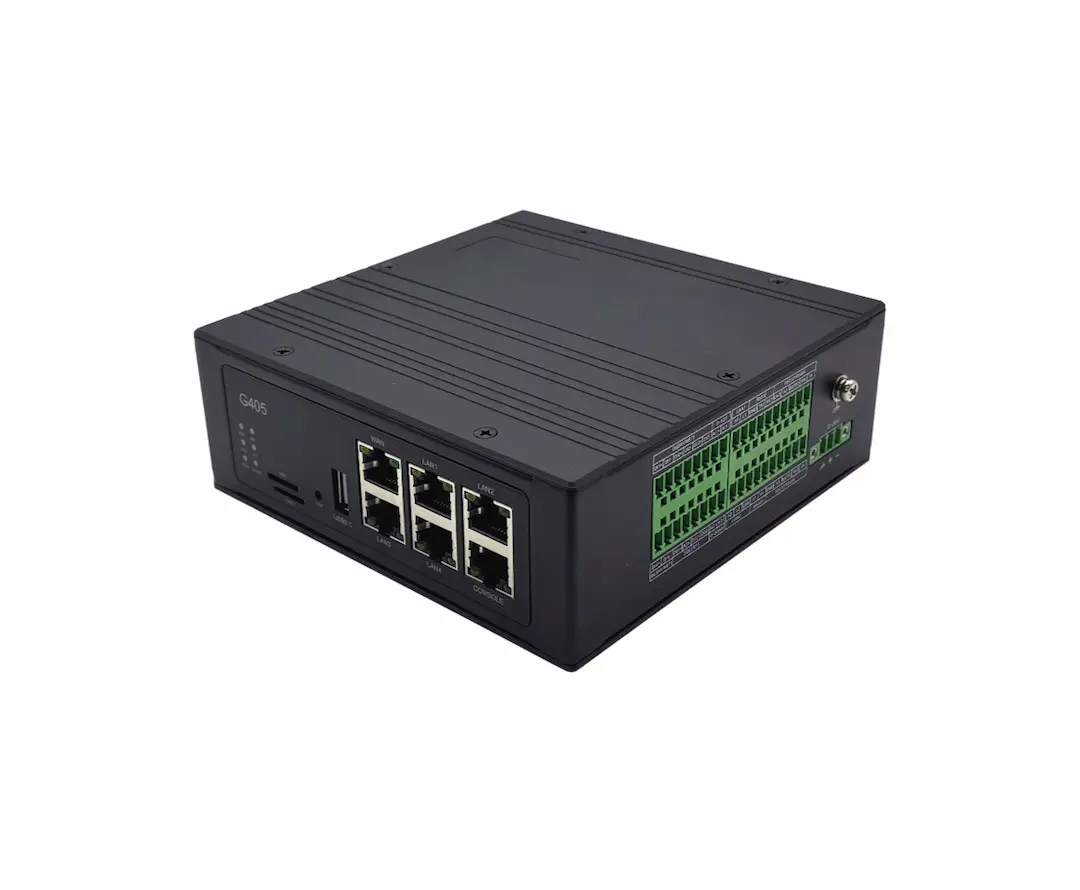
Industrial sites often combine PLCs, sensors, meters, and software systems built at different times. Connecting them reliably starts with understanding the communication task. A Modbus-focused gateway may solve a defined protocol need, while an industrial IoT gateway can also process data locally and deliver it to wider systems. The choice depends on the devices involved and what the data must do next.
- Understand the Difference
Modbus is an industrial messaging protocol for exchanging values and commands between control devices. It defines how data is addressed and represented, but not one specific physical network. Modbus RTU commonly uses serial links such as RS-485, while Modbus TCP runs over Ethernet and TCP/IP.
A Modbus gateway connects devices or networks that cannot communicate directly. It may bridge serial Modbus RTU devices to Modbus TCP or collect register values for an upstream application. Confirm supported variants and conversion functions before buying; the label “gateway” does not guarantee every form of translation.
An industrial IoT gateway has a wider role. In addition to protocol connectivity, it may filter and aggregate data, run local rules or applications, and forward selected information to a server or cloud platform. Some devices support several industrial protocols on the field side and MQTT for upstream communication.
- When a Modbus Gateway Is Enough
Choose a focused solution when the integration job is narrow and well defined. A facility may need to read energy meters over RS-485 and deliver readings to a PLC or SCADA system over Ethernet. A modbus gateway that supports the required serial settings, register map, addressing, and Modbus TCP role may be sufficient without additional computing functions.
This approach can reduce configuration effort when the existing control system already handles logging and analytics. Check serial port count, baud rates, electrical isolation, concurrent connections, and the required client or server role. Test register scaling, byte order, polling intervals, and exception handling with real devices.
A focused gateway may be less suitable for local decisions, multi-protocol data normalization, remote fleet management, or cloud connections. Verify additional features in the specification rather than infer them from a product name.
- When an Industrial IoT Gateway Is Better
An industrial IoT gateway is more suitable when field data must serve several systems. A factory could collect values from PLCs, temperature sensors, and power meters, then send selected readings to a manufacturing execution system or cloud dashboard. Consolidating these paths may reduce separate hardware requirements.
Edge processing is useful when connectivity is intermittent, response time matters, or sending every raw value would use unnecessary bandwidth. Depending on the model, a gateway may apply thresholds, aggregate readings, buffer data during an outage, or trigger local actions. Verify support for buffering, rule execution, and local applications; an “IoT” label alone does not guarantee real-time performance or autonomous control.
Protocol coverage can simplify integration across equipment generations. A gateway supporting Modbus alongside OPC UA or DNP3 may connect different devices if drivers and data mappings are configured. MQTT can publish selected values to a broker or cloud service. Vantron’s edge gateway category lists support multiple industrial protocols, but buyers should verify the actual model. When evaluating an edge computing iot gateway, review the whole data path, not just the protocol list.
- Evaluate Compatibility, Security, and Cost
Begin with a device inventory listing each controller, meter, and sensor, its protocol and physical interface, and the required data points. Identify whether the system reads values or also writes commands. Incorrect addressing, scaling, or permissions can affect equipment behavior, so test representative devices before rollout.
Check network and security requirements next: serial and Ethernet ports, cellular or Wi-Fi access, VPN support, and the topology approved by IT. Restrict unnecessary access and define how credentials, updates, and event logs will be managed. Security depends on system design and maintenance, not one gateway feature.
Compare environmental and power specifications with site conditions such as vibration, electrical noise, dust, and temperature changes. Review mounting, replacement procedures, documentation, SDKs, software maintenance, technical support, and product availability. Purchase price is only one cost; engineering time, downtime, and migration work can be more significant.
- Plan for Maintenance and Expansion
For one machine, basic protocol conversion may be enough. For a multi-site deployment, remote diagnostics, centralized configuration, monitoring, and controlled updates can be equally important. The edge gateway portfolio from Vantron lists support for industrial protocols including Modbus, OPC UA, and DNP3, alongside edge data handling and remote management options. Confirm which functions are included in the selected model rather than assuming every product has identical capabilities.
Document register addresses, units, scaling, timestamps, and data ownership. Define what happens when a device stops responding or the uplink fails. Retry rules, local buffering, alarms, and recovery behavior help teams distinguish a device fault from a network or cloud problem. Before commissioning, verify documentation and support resources as well as hardware.
Match the Gateway to the Task
A Modbus gateway is often enough when the goal is dependable communication between known Modbus devices and an existing control network. An industrial IoT gateway is better suited to projects needing multi-protocol data collection, local processing, cloud connectivity, or remote management. In both cases, verify protocol roles, interfaces, environmental ratings, security controls, and support arrangements. A requirements-led evaluation helps manage implementation costs while leaving room for practical expansion.
