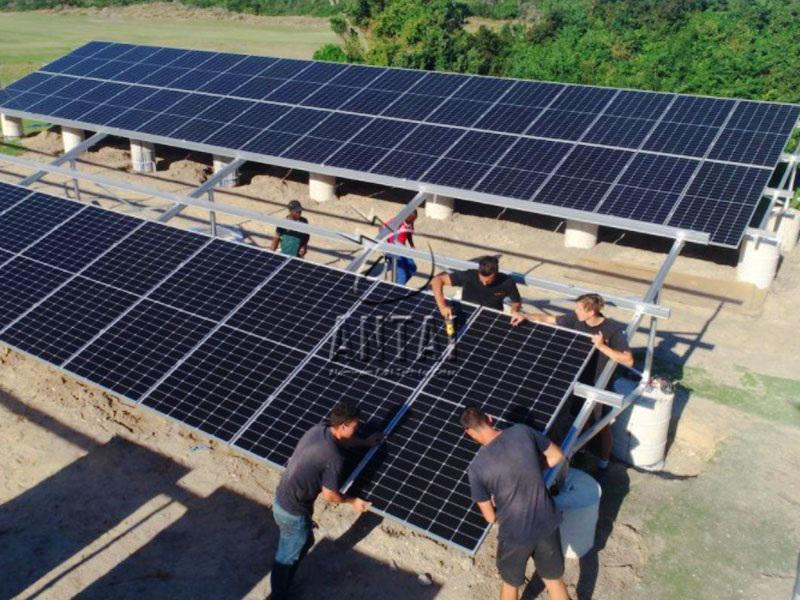
A photovoltaic mounting structure creates a load path from the modules to the foundations and supporting ground while supporting energy generation, construction access, drainage, and maintenance. Its components cannot be selected independently because a change in row geometry, foundation stiffness, module size, or connection tolerance alters loads and interfaces elsewhere.
A ground-mounted solar system therefore requires coordinated structural, civil, mechanical, electrical, and operational design. Antaisolar‘s portfolio spans conventional arrays, vertical systems, carports, agrivoltaics, and fishery-PV structures, showing how a common architectural process can lead to different physical solutions for different sites.
Load Transfer From Modules to the Soil
Module clamps or bolts transfer wind, snow, gravity, and maintenance forces into rails or purlins. Those members distribute demand to rafters, posts, braces, and connections before foundations deliver compression, tension, shear, and moment into the ground. Every interface needs compatible capacity, stiffness, tolerance, and corrosion protection.
Connections influence both strength and assembly. Bolt grade, hole geometry, slip behavior, torque, edge distance, bearing, and access determine whether the design load capacity can be achieved in the field. Slotted adjustment can absorb construction variation, but excessive freedom may create movement or reduce connection capacity.
Foundation behavior depends on soil layering, groundwater, installation method, embedment, and group effects. Pull-out and lateral load tests should use representative foundation installations, test procedures, and acceptance criteria. Reaction schedules must distinguish interior, edge, corner, end, and special rows so civil quantities match structural demand.
Antaisolar provides tailored structural design using high-performance materials and optimized configurations intended for more than 25 years of service. Engineering submittals should connect module data, member calculations, connection checks, pile reactions, test results, and installation tolerances through a controlled revision set.
Coordinating Civil, Electrical, and Installation Interfaces
Site grading determines pile reveal, slope transitions, drainage, erosion, road access, and module clearance. Designers should limit abrupt grade changes and protect natural water paths. Pile elevation tolerances must remain compatible with post adjustment, rail alignment, module-plane requirements, and cable clearance.
The electrical design shares the structure. String cables, harnesses, connectors, grounding or bonding conductors, combiner routes, and trench crossings need protected paths that accommodate movement and thermal expansion. Sharp edges, unsupported connectors, water traps, and inaccessible service loops can undermine an otherwise sound ground mounted solar system.
Antaisolar works with installers and engineering, procurement, and construction (EPC) contractors and can provide onsite support for installation and commissioning. Field documentation should define survey control, pile acceptance, component identification, fastener torque, coating repair, cable management, inspection sampling, nonconformance handling, and as-built records.
Construction sequencing also matters. Roads and drainage may need completion before material distribution; pile verification should precede mass assembly; and sample rows can validate tools, crew balance, alignment, and tolerances. Early electrical coordination prevents finished structural rows from blocking trenching or connector access.
Long-Term Operation of the Integrated Asset
Commissioning verifies more than electrical output. Structural sign-off can include bolt torque, alignment, coating condition, drainage, foundation records, module attachment, bonding, cable support, and closure of repaired items. These records establish a baseline for future inspections and warranty claims.
Operating teams need access for vegetation management, cleaning, module replacement, electrical testing, corrosion inspection, drainage repair, and foundation observation. Agrivoltaic, fishery, carport, and vertical configurations introduce additional users or environmental conditions that should be represented in maintenance procedures.
Antaisolar reports experience covers 48 projects worldwide, alongside regional warranties up to 15 years and certification marks from several testing and conformity organizations. Owners should review the underlying scope and convert regional service, warranty, and support arrangements into response times and document-retention requirements.
Architecture succeeds when loads, tolerances, water, cables, construction, and maintenance are designed as one system. Clear interface ownership among the module provider, mounting supplier, civil engineer, electrical designer, contractor, and operator prevents gaps that would otherwise appear only after installation.
