Selecting suitable power equipment for early infrastructure projects requires more than checking output capacity. Small construction sites, temporary facilities, and micro communication stations need stable electricity with controlled investment. A generator system usually combines an engine and an alternator, where the alternator converts mechanical energy into electrical energy. For equipment manufacturers and system integrators, choosing the correct alternator capacity, protection structure, and voltage regulation performance is important for reliable operation.
Application Analysis for a 50 kva generator in Small Construction Sites
Small construction projects often require electricity for lighting, tools, welding equipment, and temporary control systems. A 50 kva generator solution may be considered when the site has moderate power demand and requires continuous operation. However, the selection should be based on actual load calculation instead of only rated capacity.
For example, a remote construction area may have limited grid access, making temporary power equipment necessary during the early building stage. The engineering team needs to evaluate peak loads, working hours, and possible future equipment additions. A suitable alternator configuration can help maintain stable power output while avoiding unnecessary equipment costs.
Matching Alternator and Diesel Engine Torque Requirements
The alternator does not work independently in a generator system. It requires mechanical power from the diesel engine to produce electricity. Proper torque matching between the engine and alternator affects operating efficiency, especially when loads change frequently.
When selecting equipment for a 45 kva generator, engineers should check whether the diesel engine can provide sufficient mechanical input under different operating conditions. If the engine capacity is too small, voltage stability and operation performance may be affected during sudden load increases. A suitable speed and torque relationship allows the alternator to operate within its designed range.
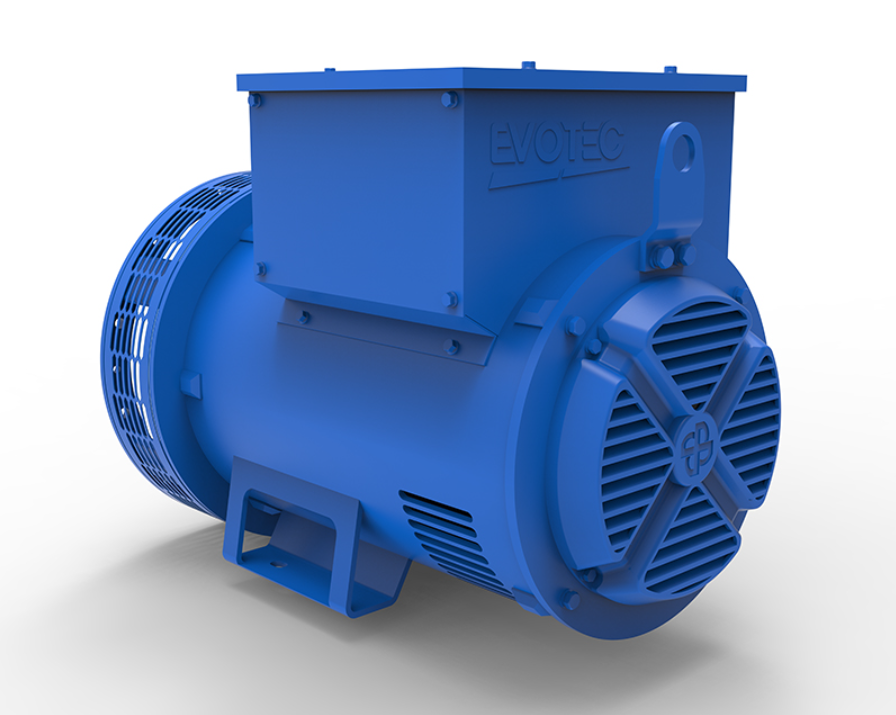
An alternator manufacturer should consider structural design, electrical characteristics, and mechanical compatibility during product development. EvoTec Power focuses on alternator manufacturing for industrial applications, providing generator head solutions that can be integrated with different engine systems rather than supplying complete generator sets.
Comparing IP23 and IP44 Protection for Outdoor Environments
Environmental conditions influence alternator selection, especially for outdoor construction areas and locations with micro dust exposure. IP23 and IP44 protection structures provide different levels of environmental protection depending on application requirements.
IP23 protection is commonly used where basic protection against solid objects and water spray is required. It can be suitable for controlled environments with limited exposure. However, outdoor construction sites may experience more dust, humidity, and changing weather conditions.
IP44 protection provides improved resistance against solid particles and water splashing from different directions. For equipment installed near dusty roads, temporary buildings, or industrial areas with fine particles, a higher protection level may offer better adaptability. The final choice should consider installation location, maintenance frequency, and operating environment.
The EVO188 Series Industrial Alternator from EvoTec Power is designed for industrial generator applications. It supports a power range of 25/54kVA, voltage options of 400V and 480V, frequency options of 50Hz and 60Hz, and 2/4/6/8/10 pole configurations. Its short structure design helps improve ventilation and reduce installation space requirements.
Checking AVR Accuracy for Communication and Precision Equipment
Voltage stability is a key factor when power equipment supports sensitive loads. Micro communication stations, monitoring systems, and precision instruments may require stable voltage output because sudden voltage changes can affect equipment operation.
When evaluating a 50 kva generator system, engineers should review the AVR performance of the alternator. The automatic voltage regulator controls output voltage changes caused by load fluctuations. For communication applications, stable regulation performance helps maintain consistent power supply for network devices and control equipment.
Different projects have different requirements. A small construction site may focus on basic voltage stability, while a communication station may require stricter control due to continuous operation. Reviewing AVR adjustment accuracy, response speed, and compatibility with connected equipment helps determine whether the alternator matches the application.
Compact Design and Custom Solutions for Industrial Integration
Space limitations are common in remote power projects. Equipment installed in temporary facilities or compact machine rooms often requires practical structural design. A shorter alternator structure can reduce installation difficulty and provide more flexibility for system integration.
The EVO188 Series also uses a shockproof design and additional marine varnish treatment to improve moisture resistance, mould resistance, and anti-fogging performance. These features are suitable for applications where equipment may face humidity or changing environmental conditions.
For industrial partners requiring customized solutions, EvoTec Power provides alternator products covering industrial, high-voltage, marine, and special customized applications. Their independent research and development capability includes national design patents, while material selection and production management support stable delivery for OEM and ODM cooperation.
Balancing Reliability and Budget for Remote Micro Nodes
Early infrastructure projects often need to balance investment limits with operational reliability. A 45 kva generator configuration may fit smaller power requirements, while larger capacity options can support additional equipment or future expansion.
For remote micro communication stations and initial construction projects, the selection process should include load evaluation, engine torque matching, protection level analysis, and AVR performance checking. These technical factors help project teams avoid overspending while maintaining suitable power availability.
A practical power solution depends on matching equipment characteristics with real operating conditions. By focusing on alternator specifications, environmental requirements, and integration needs, businesses can create a balanced approach for temporary construction power and remote infrastructure development. EvoTec Power supports these applications through alternator solutions designed for industrial generator systems, helping partners achieve reliable performance with controlled project costs.
